Athletics
Why hurdlers count, and what happens when the count breaks
Hurdling is a rhythm event before it is a speed event, and the fixed stride pattern between barriers is what allows an athlete to run rather than to negotiate.
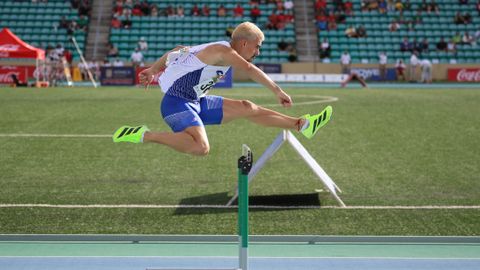
The stride pattern is the event
The barriers in a hurdles race are set at fixed intervals, which means the distance between them can be covered in a whole number of strides. Athletes settle on a count and repeat it, so that every hurdle is met from the same take-off distance with the same leg leading. That consistency is what allows the barrier to be cleared as part of the running action rather than as a separate jump.
Any athlete who has to adjust his stride approaching a hurdle is no longer running the race; he is solving a problem while decelerating. This is why hurdling is often described as rhythm running, and why athletes with lower flat speed can beat faster ones over barriers.
Getting the count from the start
The approach to the first hurdle is the only section with a different stride count, since it begins from blocks rather than from full speed. The number of strides taken there sets which leg will lead over the first barrier and therefore over every barrier that follows. An athlete who miscounts out of the blocks arrives at the first hurdle on the wrong leg and must either stretch or chop to correct it.
That correction costs speed at the point in the race where acceleration matters most, and the effect persists through the following barriers. Coaches therefore treat the start and the approach as a single rehearsed unit rather than as two separate technical elements.
Stretching and chopping
When the rhythm is lost there are two ways to recover, and both are expensive in different ways. Stretching means reaching for the take-off point with a longer stride, which lowers the hips and reduces the ability to drive off the ground. Chopping means inserting a shortened stride, which keeps the hips high but breaks the acceleration pattern and takes time to rebuild.
Most athletes have a preference and rehearse it, since the recovery is more reliable when it is a practised response rather than an improvisation. Athletes who have never rehearsed either tend to do both within a single race, and the rhythm does not return before the finish.
The two legs have different jobs
The lead leg is driven up and forward with the knee high, and its function is to get the body over the barrier without lifting the centre of mass unnecessarily. The trail leg follows in a flattened path to the side, rotating at the hip so that the foot clears the barrier without the leg being lifted vertically. That separation matters because vertical movement is wasted energy in an event measured horizontally.
The lead leg must also come down quickly rather than floating, since the sooner the foot contacts the ground the sooner the next stride begins. Athletes who clear the barrier comfortably and land slowly are losing time in the air even when the clearance looks clean.
Fatigue and the count late in a race
Stride length shortens as an athlete tires, which threatens the count in the closing barriers where the margin was already smallest. That is why the later hurdles are where most contact occurs, and why athletes practise the final barriers under fatigue rather than fresh. The response is not to lengthen the stride, which costs hip height, but to maintain frequency and accept a slightly closer take-off.
A closer take-off means clearing the barrier with less margin and a greater chance of contact, and athletes accept that trade to keep the rhythm. The alternative, adding a stride late in the race, is almost always slower even when the clearance that follows is cleaner.
- A fixed stride count converts each barrier into part of a running rhythm
- Losing the count forces a stretch or a chop that costs speed
- The lead leg and trail leg have separate technical jobs