Football
Why a goalkeeper's starting position matters more than the save
Most of the work that prevents a goal happens before the shot, in a set of positional decisions that reduce the number of saves a keeper is asked to make.
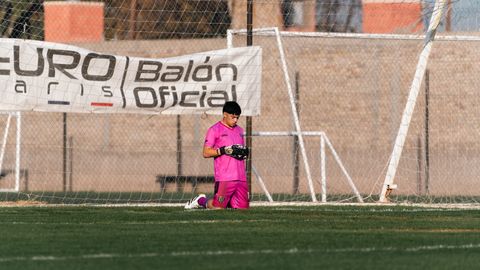
Cutting the angle is geometry, not bravery
A goalkeeper standing on his line offers a striker the full width of the goal, and every step forward along the bisector of that angle removes some of it. The removal is not linear, because the visible target shrinks quickly over the first few steps and then far more slowly as the keeper advances. That is why keepers who advance a long way often gain very little while exposing themselves to a chip they can no longer reach.
The efficient position sits at the point where the angle has been meaningfully reduced but the ball can still be intercepted if it is lifted. Finding that point repeatedly under pressure is a matter of rehearsed reference marks rather than of judgement made afresh in each moment.
Depth is set by what is behind the line
A keeper's distance from his own goal is not a stylistic preference; it is a response to how much grass exists between the defensive line and the goal. When the line pushes high, that space becomes the most dangerous area on the pitch, and the only player who can defend it is the keeper. Standing higher converts a through ball from a scoring chance into a straightforward interception, which is worth far more than a spectacular save later.
The cost is that the goal behind him is briefly undefended, and a lofted ball over the top becomes a live threat rather than a hopeful attempt. The keeper is therefore continuously trading one class of risk for another, and the trade has to be recalculated every time the ball changes hands.
Moving with the ball rather than with the shot
A keeper who repositions only when a shot becomes likely is always arriving, and a body that is still travelling cannot spring in either direction. The habit that prevents this is continuous small adjustment as the ball moves across the pitch, so that the keeper is already correct when the shot arrives. Those adjustments are made with short shuffling steps rather than crossovers, because crossing the feet leaves the keeper momentarily unable to push off.
The final movement before a shot is a set position, a brief stillness that allows the legs to load and the weight to sit forward on the balls of the feet. Keepers who are still adjusting at the moment of contact tend to dive late and towards the side they were travelling to, which is why they beat themselves.
Reading the striker's body rather than the ball
At close range there is not enough time to react to the ball, so the keeper reads the striker's hips, standing foot and the angle of the approach. The planting of the standing foot is the most reliable cue, since it fixes the direction the striker's body can generate power towards. Reading it does not tell the keeper where the ball is going, only which options have become unlikely, and narrowing the range is enough.
Keepers who guess on the cue commit early and are easily deceived; keepers who use it to weight their stance stay balanced and still gain time. The distinction is subtle from the stand but obvious in the outcome, because one keeper is moving before contact and the other is merely leaning.
Defending crosses without leaving the goal open
The decision to come for a cross is binary and irreversible, and a keeper who starts and then hesitates is worse off than one who never moved. The judgement depends on the flight of the ball, the traffic in front of it and whether the keeper can reach the ball at a height nobody else can. A keeper who stays has to reset his position immediately, because a cross that is headed back across goal creates a shooting angle that did not exist a second earlier.
The most useful habit is a clear early call, since defenders who know the keeper is coming will attack the man rather than the ball. Where that communication breaks down the outcome is usually a defender and a keeper arriving at the same point with neither of them in control.
- Angle and depth decide how much goal the striker can actually see
- The keeper's depth is set by the space behind the defensive line
- Set position and timing matter more than reaction speed


