Tennis
Why Servers Target The Body On Big Points
A serve aimed straight at the returner is harder to handle than a faster one to the corner, because it removes the space a player needs to swing.
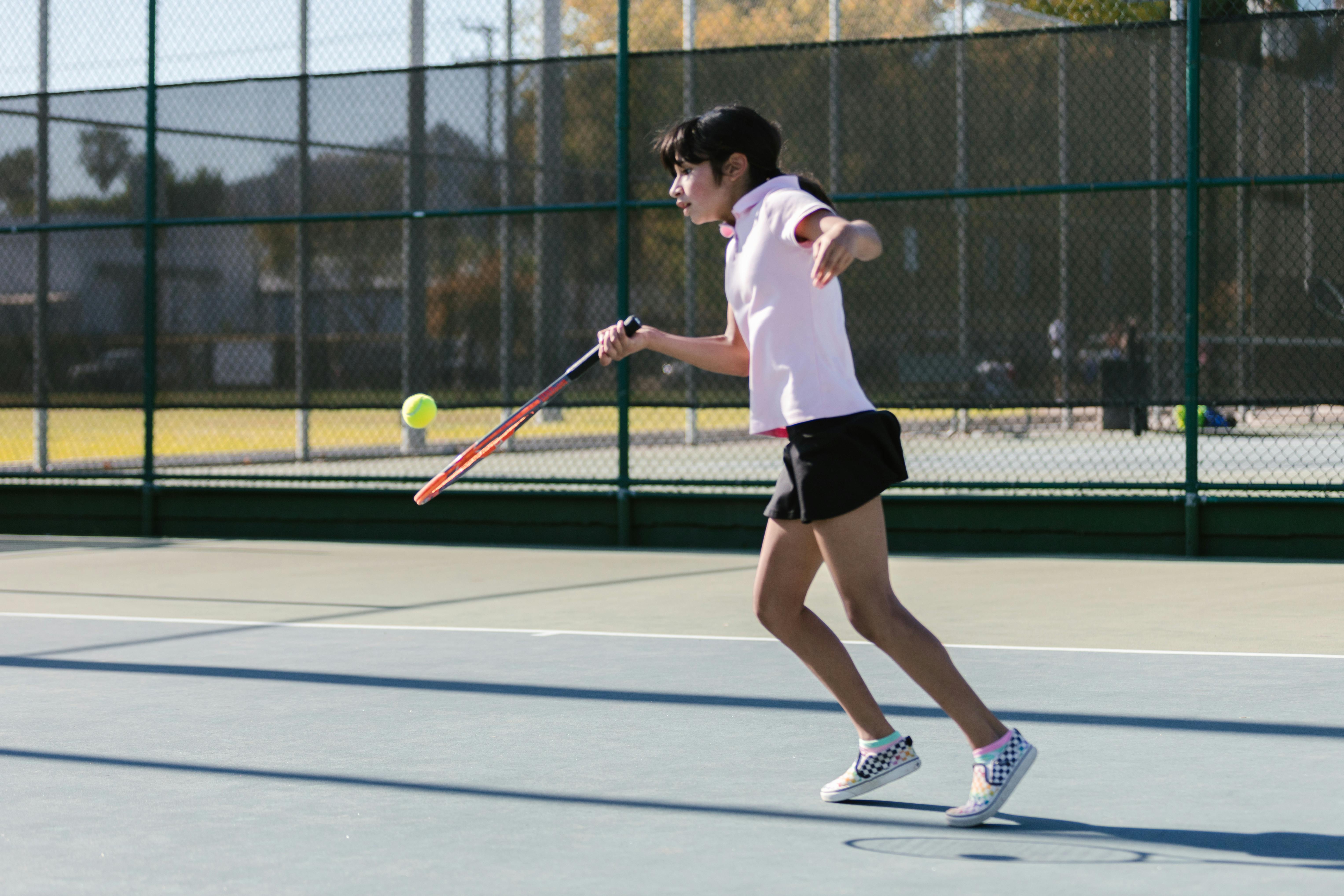
Players facing break point often serve directly at the returner rather than at a line. The choice sacrifices angle for a different kind of difficulty.
The return needs space, not time
A returner handling a wide serve has a clear problem to solve: reach the ball and hit it. The swing itself is unobstructed once the feet get there.
A serve aimed at the hip gives the returner plenty of time but nowhere to put the racket, since both a forehand and a backhand require the ball to be away from the body.
The returner must therefore move backwards or sideways while preparing, and any footwork performed during the swing degrades the contact point.
It removes the decision the returner has practised
Return practice is organised around choosing forehand or backhand quickly, and both wings are drilled from a ready position with the ball arriving to one side.
A body serve delays that decision because the ball's path is ambiguous until late, and a returner who commits early is left with the wrong shoulder forward.
Under pressure, hesitation is amplified, which is why the tactic appears disproportionately on the points that matter rather than in routine service games.
The margin for error is larger
A serve aimed at a line has only a few centimetres of tolerance, and a server whose arm tightens under pressure will miss it long or wide.
The body target is far more forgiving, since a delivery that misses its mark by some distance still lands in the box and still crowds the returner.
Servers therefore gain reliability at the same time as they gain effectiveness, which is an unusual combination and the main reason the tactic persists.
It sets up the following shot
A crowded returner rarely produces depth, so the ball comes back short and slow, giving the server a straightforward first strike into open court.
Servers often plan the point as a pair of shots, with the body serve creating a predictable reply rather than aiming for an ace outright.
This is why body serves are common on second serves as well, where the reduced pace makes an outright winner unlikely but a weak reply remains achievable.
Returners counter by moving first
The standard answer is to step to one side before the serve arrives, deliberately opening one wing so the ball is no longer arriving at the body.
That movement is visible to the server, who can redirect towards the vacated side, so the returner must disguise the shift or make it very late.
Some returners instead stand well back, buying enough distance for the ball to move away from them naturally, which costs court position and invites a wide serve.


